Friday, August 24, 2012

10 Tips for Dating With Depression

Dating can be a challenge when you suffer from depression. That said, meeting a new person can also be a source of joy. These 10 simple tips can help make dating a bit easier.

Finding love


single-sad-datingAbout 18 million Americans suffer from depression and another 20 million worldwide use dating websites each month, according to Online Dating Magazine. Chances are, there are people who will be in both groups.

But dating can be a challenge when you suffer from depression. “Sometimes if you don’t feel like smiling but are in a situation where you’re expected to be happy, that can make you feel even worse,” says Helen Friedman, PhD, a clinical psychologist in private practice in St. Louis.

That said, meeting a new person can also be a source of joy. These 10 simple tips can help make dating a bit easier.

Consider professional help

consider-help-depressionIf you’re depressed, dating can magnify some of your challenges, such as fatigue, irritability, low self-esteem, and reduced libido.

The best way to stay strong? Seek treatment, if you haven’t already.

With greater awareness about depression, the stigma of mental illness has diminished somewhat. Therapy and/or medication use is common and often very successful.

More than 80% of people who seek treatment get relief from symptoms, according to Mental Health America.


Time it right

time-it-rightYou need to take good care of yourself before you can take care of someone else in a relationship.

To do this, be sure to engage in positive self-talk, Friedman says. And if you are on medication, take it religiously; be consistent with therapy; surround yourself with a support system of friends and family; and be around upbeat, positive people.

“Don’t push yourself to date if the timing doesn’t feel right,” she says. “Honor yourself. You might need to lick your own wounds first.”

Don’t tell on the first date
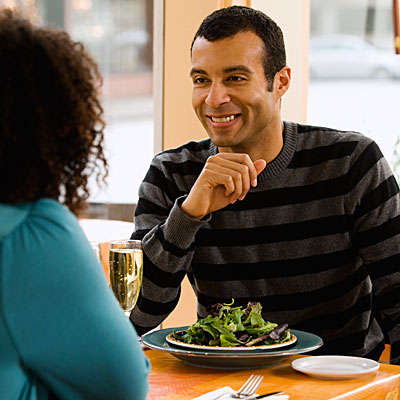
depression-dont-tellYou don’t owe it to the person to discuss your depression on a first date, Friedman says.

If things become more serious, however, you should tell your potential partner. Friedman says a good time might be when you decide to see each other exclusively or when you just feel that you care more deeply about each other.

“There are always individual differences,” she says. “Something may come up in a conversation where it would feel like a natural time or that it would be dishonest not to. You might choose that time to share that you have depression.”

How to talk about it

how-to-talk-depressionWhen you feel the time is right, Friedman suggests a three-part “script.”

First, tell your partner that she is important to you, enough so that you have something about yourself to share with her.

Second, don’t just blurt out “I suffer from depression.” Instead, preface it by telling her there’s something you’ve struggled with that’s a fairly common problem, let her know you have been diagnosed with depression and that you’re taking care of yourself by seeking treatment.

And finally, emphasize again that you care about the person and the relationship. This message is as important as telling her that you have depression, says Friedman.

Accept assistance

exercise-date-depressionIn addition to surrounding yourself with the support of friends and family, Sheela Raja, PhD, a clinical psychologist and assistant professor at the University of Illinois at Chicago, says it’s important to let potential partners know how they can help you.

For example, if you exercise regularly to help lift your mood, ask your partner to join you. If they will support you in your endeavors, “they could be a real keeper,” she says.

Telling them about the challenges you face or going to couples counseling can also be helpful. Just talking about your relationship and how depression may impact it lets a person know you want him or her to be a part of your life.

Be patient

depression-understandIf your potential partner asks questions or offers advice, recognize the good intent behind the words—even if they aren't that helpful.

For example, men often feel that it’s their job to make their partner happy, says Friedman. Understand his desire to help, but let him know you can’t always put on a happy face.

Some women, on the other hand, expect men to take the initiative to plan dates or activities. This can be hard to do when you are depressed and you have little energy. Let her know you want to be with her, but you may have to keep things low-key.

Low libido

depression-libidoDepression, and some antidepressants, can cause you to lose interest in sex.

If you are having libido problems that are medication related, talk to your doctor about alternatives that might be less likely to dampen your sex drive.

You can also let your partner know that you care in other ways. If you don’t feel like having sex, let the person know you still find him or her attractive by cuddling or being affectionate.

Don’t repeat past dating mistakes

depression-break-up
It is important to know your own weaknesses and strengths and understand your dating pitfalls.

If you find yourself falling into a pattern that didn’t work for you in the past (like dating someone who makes you feel bad about yourself), leave the situation, and take some time off or find another companion.

“Therapy might help you to work out any issues you have in order to go forward in your relationships and not repeat past mistakes,” Friedman says.

Online dating

Millions of people turn to the Internet to find romantic partners, but that doesn’t mean it’s not difficult, says Friedman.

online-dating-sad"It is easy to get discouraged when dating online," she says. "It takes skill to know how to navigate online dating to find someone special."

There are sites geared specifically for those with mental illness, such as Nolongerlonely.com. Friedman says these types of sites can be a good place to go to, but consider mainstream dating sites as well.

Don’t give up after meeting just one or two people. Discuss the process with friends and family; having a good support system can help.


Acceptance

acceptance-depressionOne thing to remember about dating is that all people have some kind of baggage they bring along for the ride. So don’t be too hard on yourself, says Los Angeles–based therapist Nancy Irwin, PsyD.

“Most people have some issue that they manage—either their weight or acne or a past,” she says.

If the person and the relationship are right for you, depression isn’t likely to be a deal breaker.


Wednesday, August 8, 2012

Top 10 Dating Tips

Dating Tips and Advice for Singles

Whether you are new to the dating scene, are reentering the dating scene, or are a serial dater, you can use dating tips and advice. No one is a dating expert – even the most beautiful and wealthy people all struggle with matters of the heart. Everyone can learn something about how to date more, how to attract the types of people we want to attract, and how to make sure initial chemistry blooms into an enduring relationship.
The truth is, there are no magic formulas, no fail-proof tricks, no cunning ways of trapping Mr. or Miss Right. There are however some essential facts that you should always bear in mind along the way. Dating tips are just that -- tips, not one-size-fits-all guarantees. Different tacks will work for different people. It depends on the situation, who we are, where we are in our lives, etc. However, there are some threads of advice that are fairly universal and can benefit anyone who practices them:

Top 10 Dating Tips
  1. Get prepared for dating. If you really want to succeed in the dating game, be ready to commit to dating. Half-heartedness won't work. In fact, it won’t even get you half-way. If you really want to date, put some effort into it. Do some research and think about what you want out of dating. Prepare yourself for the inevitable rejection we all face at some point in dating and commit not to give up.
  2. Get your act together. Begin a regime of looking your best. Join a gym, read health magazines, get fit and start a diet. Get your hair cut or styled and begin a new regime of good grooming or beauty treatment. Though it will not find you a date in itself, you will feel a million times more confident about yourself, and others can sense that.
  3. Go shopping and treat yourself to new clothes and even a whole new look. Get your image right, one that you can manage and live with, but one that flatters you. Don't try to be someone you’re not, but amplify and accentuate your positives. Throw out those tired jeans, old sweaters or cardigans and spruce yourself up. Your date will appreciate that you demonstrated some effort.
  4. Think about what you want to gain from dating and what timeframes you expect. Do you see yourself married within 2 years? If you do, then approach dating accordingly. If you are more laid back and don't take dating too seriously then ask yourself some honest questions about why you are dating and what you hope to achieve. If it is purely sex then ask yourself if you are about to be honest with those you hope to date.
  5. Surround yourself with people who will support your dating aims. By following the first four tips you will feel better and be more focused. Don’t sabotage this by sitting around with friends who are negative about love and relationships (often the married ones). Start attending social functions frequented by singles. Sitting alongside couples at dinner parties in suburbia is not necessarily where you need to be right now.
  6. Choose those you have a good chance of dating. Be realistic. In other words, your dating is based on the whole package you present as well as just your personality. If you are looking for a glamour girl or boy and want to date someone trendy and gorgeous, great! Just know that others will expect you to be the same.
  7. Join clubs, societies, sports events, drama groups -- anything that might help you meet like-minded potential partners. You will not meet people by staying indoors and playing video games – many have tried and failed at this approach.
  8. Take time off from dating occasionally if it’s not going well or causing dating fatigue. Recharging your batteries and keeping confidence and optimism levels high is an absolute must. We all hit rough patches, but don’t let your search for love become a death march. Date in phases if necessary.
  9. Enjoy dating for what it is, dating. It is meeting people and socializing and spending time in the company of stimulating individuals who may or may not play a bigger part in your life down the road. The fact is, most people have something interesting to offer. While you may not be out on the dating scene looking for new friends, you may well find one or two fabulous people along the way.
  10. Never make yourself too available. People like mystery and enigma and the thrill of the chase when dating. As part of keeping up the mystery, do not sleep with your dates early on. The longer a person is made to chase and fall for you within reason, the more likely that love may blossom. (And yes, this goes for both men AND women!) If the chemistry peaks too early, your emotions may never have time to catch up and the relationship will eventually wither away.


Monday, July 23, 2012

Eight Ways to Make Online Dating Sites Work for You

What online dating sites can and can’t do for your love life. 
 
Online dating sites promise to use science to match you with the love of your life. Many of them even go beyond the matching process to help you confront the complex world of finding (and keeping) partners. eHarmony provides its users with advice on dating, relationships, and—of course—plenty of diagnostic quizzes.  Although these online dating sites attract millions of customers and billions of dollars, scientific study reveals that they cannot possibly come through on these promises. In a recent comprehensive analysis, Northwestern University psychologist Eli Finkel and collaborators claim that online dating sites not only don’t improve, but may even hurt those seeking happiness in their relationships.

It was natural enough that online dating services would develop and evolve over the past two decades. The growth of social media encourages internet-based connections with the people we know and love and the people we would like to get to know and love.  We are busier than ever at work, our jobs require that we either travel or move to new cities, and as a result, we don’t have the luxury to rely on finding a partner through connections with family or friends. Online dating sites help fill the gap that our busy lives have created in our search for connection.

Online dating services are not only convenient, but they also have the apparent advantage of using systematic methods to match us with the partner of a lifetime. Their diagnostic tests seem to key in on the fundamental essence of our personalities, ensuring that we’ll be paired with the one person in the world whose fundamental essence will resonate to ours. They also promise to improve the odds of our finding that person by providing us with access to large numbers of potential romantic partners; more than we would ever meet on our own.

To find out how best to use online services, we first have to examine their strengths and weaknesses. Finkel and his collaborators critique the three main areas in which online dating services claim to be superior to the offline, or old-fashioned, way of meeting people in person.  Those areas are:
  1. Access- opportunities to meet more people than you could in person
  2. Communication- ways to connect you to people in an online environment
  3. Matching- use of mathematical formulas (algorithms) to pair you with a partner
Let’s examine each of these areas in more detail.  First, a caveat—they did not look into sites such as Craiglist, sex or hookup sites, infidelity sites, sites for arranging group dates, social networking sites (such as Facebook) or online video games (such as World of Warcraft or Sims)

Access
Having the opportunity to examine the profiles of hundreds, if not thousands, of potential matches must surely be an advantage, right? Unfortunately, when it comes to online dating, there is no safety in numbers. Because you’re not meeting actual people, but instead examining their profiles, you’re not going through the normal give-and-take that occurs when people meet and talk for the first time.

The decision-making processes we go through when we’re examining online profiles are also different than those we use in offline situations.  As you flip through those profiles, you’re not necessarily pausing and studying each one as carefully as you would a real person. Some feature might pop out at you (particularly appearance) that causes you to think “Next?” When you make a decision about who to establish communication with, it may not be a particularly well-informed one. As Finkel and his colleagues state, you may make “lazy, ill-informed decisions” because you’re selecting from such a large group of potential matches. The mindset you develop in this process can also cause you to think of a romantic partner not as a person but as someone who is easily interchangeable with someone else. Consequently, you may be less likely to commit to the people who you do decide to follow up on because you know there are hundreds of others out there, should this match prove flawed.

Finkel and his co-authors also caution against the false belief that there is a perfect match for you out there in the online universe. If you hold onto the false belief that you need to keep looking until you find that soul-mate, you may zip past some otherwise excellent dating prospects.

Communication
Because users can engage in extensive online communication (called “Computer Mediated Communication” or CMC), prior to meeting, they form impressions that may or may not correspond to those they eventually make when they see the real person.  When their expectation doesn’t match reality, they are then more disappointed than they would be if they had met the person earlier on in the relationship. This process is exacerbated by the tendency that people have to disguise their flaws either by bending the truth or lying outright about their age, their job, their background, or even their marital status. When you meet someone in person, you have nonverbal cues as well as the actual qualities of the person right there in front of you to guide your judgment (the vibes, as it were). That person may lie about some important fact, such as being married, but at least you have plenty of data in front of you on which to base some sort of decision.
 
Matching
Online dating services pride themselves on having developed complex formulas, or algorithms, that will diagnose you and then apply this diagnosis to helping you find the perfect match uniquely qualified to be your ideal romantic partner. However, even if they could come through on their claims (which I’ll examine in a minute), think about the logic of this process. The information you provide about yourself now describes who you are today, but it may have little to do with who you are in 10 or 20 years. People develop in myriad ways throughout their lives, in response to changes within themselves over time and changes in their life circumstances.  There is no way that an online personality test can predict how you, or your potential partners, will mature over time. The same can be said for offline matchups as well, but the problem is in what the online sites claim to be able to do. No online personality test can predict with any more certainty how a person will react to life stresses than a real-life encounter and may even be worse. At least when you are talking to a person in real time, your conversation can take you to places that might provide you with relevant data about how they will adapt to future stresses.

Now let’s look at the psychology behind the matching claims. This is where Finkel and his coauthors found the most glaring flaws.  The evidence simply doesn’t back up the claims that the predictive formulas these sites develop (and never share publicly) are effective. Among the many problems the psychologists note is the fact that online personality tests don’t necessarily tap into the key factors that will predict who will fall in love, and stay in love, with whom. Some personality tests are particularly subject to the so-called “Barnum effect,” meaning that they provide such a generic assessment that they could apply to anyone.  We also don’t know which of an individual’s personality traits best match with those of another. Although personality similarity is more likely to predict relationship success than complementarity (i.e. do opposites attract?), the question is similarity in what? There are many types of similarity, ranging from geographic promixity to political views to scores on measures of introversion-extraversion.

Similarity is also surprisingly difficult to define mathematically.  Does similarity mean there is a zero difference between you and the other person on a test score? Or does it mean that your profile maps closely to another person’s? There is also actual similarity and perceived similarity. If you like someone else, you may assume that person is very similar to you. Married partners who are highly intimate presume greater similarity between them than an objective personality score might justify.  In much the same way, when you form a favorable impression of someone you meet for the first time, you may also see similarities that wouldn’t show up on an objective test.  In an online dating environment, you don’t have a chance to make that leap of faith and assume the person you want to like has the same personality that you do. Lab studies support this observation. People’s actual similarities account for a negligible amount of the degree to which couples feel satisfied with their relationships.

If their money is in their proprietary matching formulas, then, online dating sites don’t seem to be getting a good return on their investment. Finkel and team conclude that “online dating sites have published no research that is sufficiently rigorous or detailed to support the claim that they provide more compatible matches than conventional dating does” (p. 47).  When partners do match successfully, this could be due to many other factors than the site’s mathematical formula, not the least of which is random luck. When you have enough people seeking long-term relationships with other people who choose to try a particular online service, the odds are that some of these matches will be successful regardless of which algorithm the site used.

In addition to the three sets of problems outlined here, Finkel and his team point out one inherent limitation of these sites—namely, that to stay in business, they’re better off keeping their customers unmatched. When people pair up, they drop out of the site and no longer need to use its services. However, if these sites never matched people, they wouldn’t stay in business very long. This paradox creates problems, then, but the marketplace pressure to produce satisfied customers may negate these problems somewhat. Online sites cannot, however, prevent lying or involvement by people with a history of substance abuse or violent crime.

By giving people the chance to find happiness in a relationship in ways that modern society doesn’t readily permit through real-world interactions, online dating sites can help people find partners in an efficient manner.  To make the best use of the advantages these sites have to offer, though, you’ll need to approach them with caution.

The bottom line: Eight ways to make online dating sites work for you
  1. Set your priorities for online partners. Have in mind your own criteria for what you’re looking for in a partner, not those that would appeal to other users. This means that you should give some thought ahead of time to the most important qualities that you value in people.  This will help you narrow down the potential pool.
  2. Use a site that fits most closely your own interests. Following from point #1, choose a site that maximizes the chances of finding the type of person you’re looking for. Large sites promise more potential dates, but because they are so generic you’ll have less of a chance of finding someone who shares qualities that you value.
  3. Don’t substitute online communication for the real thing. Try to meet or video-chat with your potential partner relatively early in the process before you've crystallized an inaccurate view of the person.
  4. Be realistic. People who believe that the perfect “soulmate” is out there somewhere may overlook a perfectly reasonable matchup or avoid giving that person a try.
  5. Don’t assume that the personality tests are perfect. Given that the matching algorithm’s don’t seem to do much better than ordinary offline dating methods, have an open mind toward someone who may not fit the equation but may otherwise be an excellent prospect.
  6. Beware of online liars. Listen to your gut instincts if the responses a person gives in online communication seem to be “off.” As I pointed out in an earlier blog post, there are subtle ways to spot an online liar. Even if you want very much to believe that the person isn’t lying, it’s better to be conservative and do everything you can to protect yourself.
  7. Don’t let a negative outcome affect your self-esteem. It’s disappointing when a budding online relationship fizzles, but this outcome more or less comes with the territory. If this happens to you on a repeated basis, though, consult with a trusted friend or advisor to find out where you might be making some fixable mistakes.
  8. Write your own profile truthfully, clearly, and as uniquely as possible. To make sure that you find people you’ll be compatible with, make sure they can find you. If you fudge the truth, you’ll only be setting yourself up for disappointment and wasted opportunities.
Online dating isn’t, in and of itself, a bad thing.  Like all social media, to get the most out of the process you just need to use caution, common sense, and even some psychology.

Wednesday, June 27, 2012